PMES Corporate Fitout
5 Min Read
20 August 2026The Hidden Engine of Every Workplace: Why MEP Matters More Than Ever
Share
Table of Contents+
Introduction
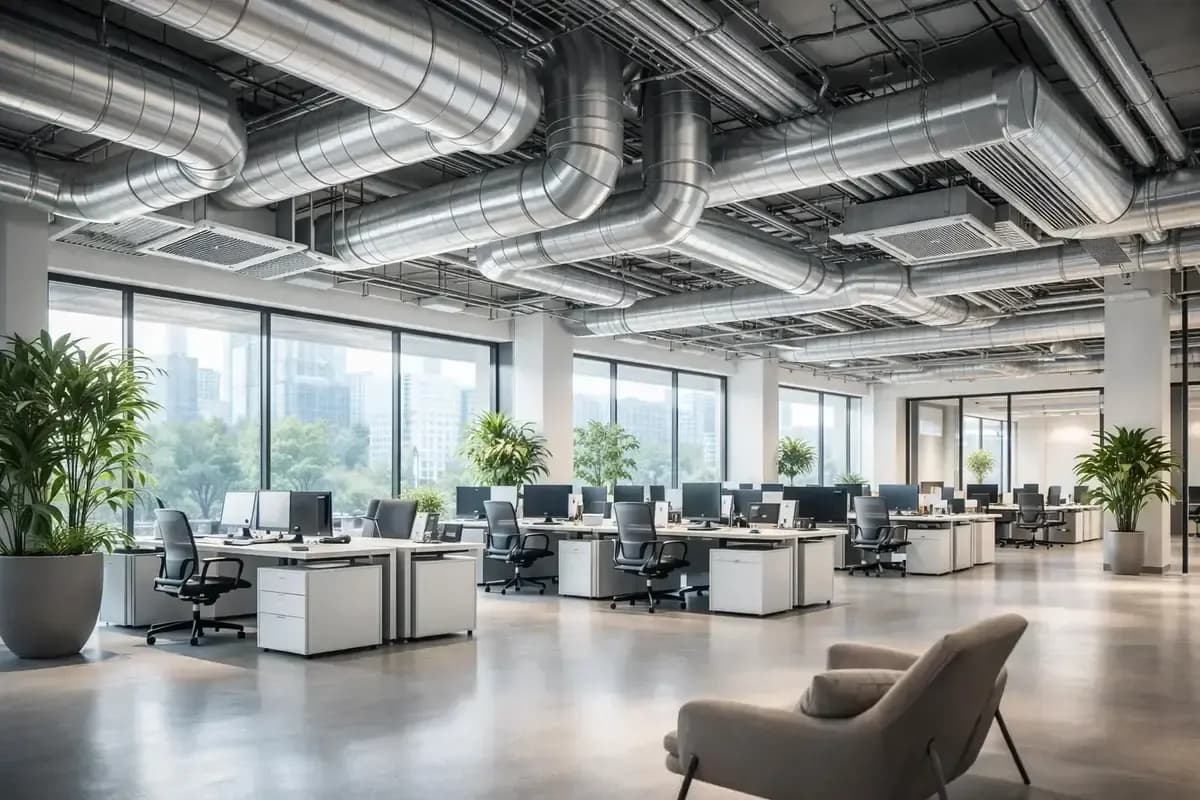
When people walk into a well-designed workplace, they often notice the interiors, furniture, lighting, meeting rooms and overall aesthetics. What they may not notice are the systems working quietly behind the scenes to make the workplace comfortable, functional and reliable.
These systems are collectively known as Mechanical, Electrical and Plumbing (MEP). They include everything from air-conditioning and ventilation to electrical power, lighting, water supply, fire and life safety systems, and other essential building services.
While MEP systems may not always be visible, their impact is experienced every day. They influence how comfortable employees feel, how seamlessly technology works, how safely people operate and how reliably a business can function.
As workplaces become increasingly technology-driven and employee expectations continue to evolve, MEP is no longer simply an engineering requirement. It has become an important part of creating workplaces that support employee wellbeing, productivity, operational efficiency and business continuity.
How MEP Shapes the Employee Experience
A workplace can have impressive interiors and thoughtfully designed spaces, but if employees are uncomfortable, the overall workplace experience can suffer.
Temperature, air quality, ventilation, lighting and acoustics all contribute to how people experience their workplace. Employees may not consciously think about these systems when everything is working well, but they quickly notice when something is wrong.
An overcooled meeting room, poor air circulation, inadequate lighting or inconsistent indoor conditions can create discomfort and affect concentration, engagement and workplace satisfaction.
This is where effective MEP planning becomes important. By creating the right indoor environment, MEP systems help workplaces remain comfortable, healthy and conducive to productivity.
The Growing Importance of Electrical Infrastructure
Technology has become an integral part of the modern workplace. Video conferencing, collaboration platforms, data networks, smart meeting rooms, access control systems and connected devices are now part of everyday business operations.
With hybrid working and digital transformation becoming increasingly common, workplace infrastructure needs to support a growing number of devices and technology requirements.
Behind every seamless virtual meeting, connected workspace and technology-enabled office is a carefully planned electrical and low-voltage infrastructure.
For businesses, the objective is no longer simply to ensure that there is enough power. Electrical infrastructure needs to be reliable, scalable and capable of adapting to future requirements.
This makes electrical planning an important part of both day-to-day workplace operations and long-term business planning.
MEP and Business Continuity
A workplace needs to function reliably, not just under normal conditions but also when unexpected situations arise.
Power failures, equipment breakdowns and safety-related incidents can disrupt business operations and affect productivity. MEP planning therefore plays an important role in ensuring business continuity.
Backup power, emergency infrastructure, fire and life safety systems and support for critical equipment all need to be carefully considered as part of workplace planning.
The value of well-designed MEP systems is often most visible when something goes wrong. Effective systems can help minimise disruption and enable businesses to continue operating with greater resilience.
Designing MEP Systems for the Long Term
MEP design should not end with installation. The real value of an engineering system lies in how effectively it performs throughout the life of a workplace.
This requires consideration of factors such as maintainability, reliability, operational efficiency and future adaptability right from the design stage.
A system that meets today's requirements may not necessarily meet the needs of an organisation several years from now. Business requirements, technology and workplace formats continue to evolve.
Thoughtful MEP planning therefore looks beyond immediate requirements and considers how systems can support changing business needs over time.
This approach can help organisations reduce operational challenges, improve system performance and create more reliable workplaces.
Why MEP Needs to Be Considered from Day One
One of the common challenges in workplace projects is bringing MEP planning into the process too late.
MEP systems influence several aspects of workplace design, including space planning, ceiling layouts, technology integration, equipment placement and overall functionality.
When engineering requirements are addressed only after the design has progressed significantly, it can result in design conflicts, changes, delays and additional costs.
Involving MEP expertise from the beginning allows design, engineering and project management teams to work together more effectively. Potential challenges can be identified earlier, coordination can be improved and decisions can be made with a clearer understanding of both design and operational requirements.
Integrating MEP from the outset helps ensure that the workplace is not only visually appealing, but also practical, efficient and capable of performing as intended.
Building Workplaces That Perform Beyond What We See
The future of workplace design will increasingly be shaped by the need to balance employee experience with technology, efficiency, resilience and business agility.
While interiors and workplace design often receive the most attention, the systems behind them determine how effectively the workplace performs every day.
MEP plays a fundamental role in creating environments that are comfortable for employees, reliable for businesses and adaptable to changing requirements.
For organisations planning and delivering modern workplaces, bringing MEP into the conversation from the outset can help create spaces that go beyond aesthetics — workplaces that are functional, efficient, resilient and built to support the business for the long term.